Professional packing for your most delicate belongings isn’t actually about how many layers of bubble wrap you use. It’s about the total elimination of internal movement within the box. If you’re preparing for a relocation, the thought of packing fragile items for moving often brings a specific kind of anxiety. You worry about that heirloom vase or the expensive glassware set you’ve carefully curated over the years. It’s natural to feel overwhelmed by the sheer volume of materials and conflicting advice found online.
We understand that these aren’t just objects; they’re the pieces of your life that make a house feel like a home. This guide shares the exact methods our professional Vancouver movers use to ensure every delicate item reaches its destination in pristine condition. You’ll learn which materials are truly essential and how to organize your boxes for maximum security. We’ll walk through a step-by-step strategy for everything from fine china to complex electronics. By the time you finish reading, you’ll have the confidence to manage your move with steady, quiet competence and total peace of mind.
Key Takeaways
- Learn why eliminating internal movement is more critical than the thickness of your wrapping materials to prevent breakage during transit.
- Discover why professional-grade corrugated boxes are essential and how to choose between unprinted newsprint and bubble wrap for different surfaces.
- Master expert techniques like the “Burrito Wrap” and “Crush Zone” for packing fragile items for moving to ensure your ceramics and glassware arrive intact.
- Gain specific strategies for protecting sensitive electronics and large delicate pieces like pianos or artwork using specialized telescopic boxes.
- Identify the clear signs of when to handle packing yourself and when to realize the value of hiring professional packing services for high-value collections.
The Physics of Protection: Why Fragile Items Break
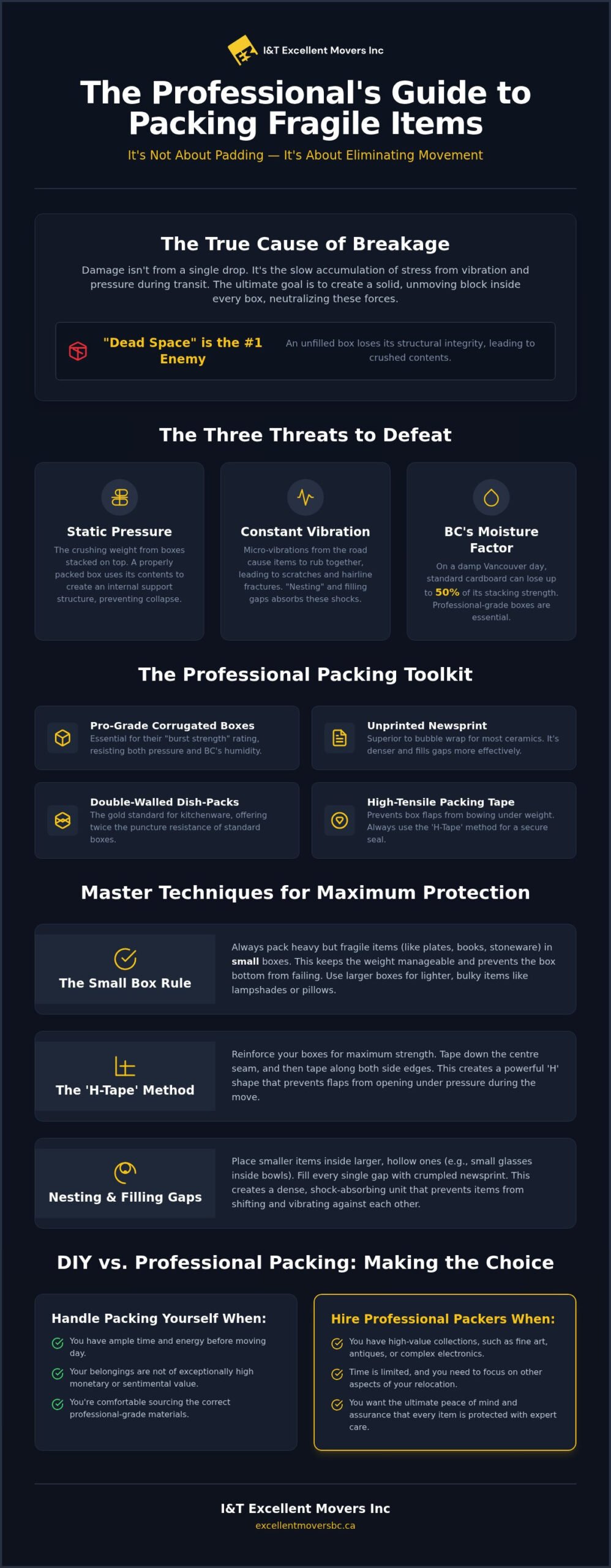
Most people think a broken plate is the result of a single, violent drop. In reality, damage usually occurs through a slow accumulation of stress during the transit process. When packing fragile items for moving, the goal isn’t just to survive a fall. It’s to withstand the constant, low-level pressure of the journey. Understanding the science of package cushioning helps us realize that static pressure and kinetic vibration are the two primary forces we must defeat. Static pressure comes from the weight of boxes stacked on top of each other, while vibration is the constant shaking caused by the road.
“Dead space” is the most common culprit for crushed possessions. If a box isn’t filled to the top with firm cushioning, the cardboard walls lose their structural integrity. Professional movers organize boxes so that the contents support the box itself. This ensures that even if another container is placed on top, the internal structure remains unyielding. We don’t just wrap items; we build a support system within every carton to neutralize gravity and movement.
Vibration vs. Impact: The Mover’s Perspective
Your items might feel perfectly secure sitting on a shelf, but a drive out to Surrey or Langley changes the math entirely. BC road conditions and truck suspension systems create constant micro-vibrations. These vibrations can cause items to rub against each other, creating hairline fractures that eventually lead to a total break. We prevent this through “nesting.” By placing smaller items inside larger ones and filling every gap with unprinted newsprint, we absorb those tiny shocks before they ever reach the glass. It’s a methodical way to ensure your kitchenware survives the trip across the Lower Mainland.
The Moisture Factor in British Columbia
Our local climate plays a massive role in the success of your move. Vancouver’s high humidity and frequent rain aren’t just an inconvenience for the movers; they’re a threat to your packing materials. Standard cardboard is porous. On a damp November day, a box can absorb enough atmospheric moisture to lose up to 50% of its stacking strength. This is why professional-grade corrugated boxes are essential. They’re designed with denser fluting that resists the softening effects of our coastal air. When packing fragile items for moving in a wet climate, keeping your supplies in a dry, climate-controlled centre until the moment they’re loaded is a small step that prevents a major collapse. Always ensure your packing paper stays sealed in plastic until you’re ready to use it to maintain its shock-absorbing crispness.
The Vancouver Packing Toolkit: Essential Supplies
Successful packing fragile items for moving begins with the integrity of your supplies. While it’s tempting to collect free boxes from the local grocery store, these used containers are a significant risk. They’ve often been weakened by refrigeration or previous dampness, which compromises their structural fibres. Professional-grade corrugated boxes are manufactured with specific “burst strength” ratings to ensure they don’t collapse under pressure. Choosing the right foundation is the first step toward a damage-free arrival.
When it comes to cushioning, unprinted newsprint is generally superior to bubble wrap for ceramics and stoneware. Newsprint is denser and doesn’t lose its effectiveness if a “bubble” pops. For high-value kitchenware, the double-walled Dish-Pack box is the gold standard. These heavy-duty cartons provide twice the puncture resistance of a standard box. You should also invest in high-tensile packing tape. We recommend the “H-tape” method, which involves sealing the centre seam and both side edges of the box. This creates a reinforced seal that prevents the flaps from bowing during your move across British Columbia.
Choosing the Right Box Size
The “Small Box Rule” is a professional secret: always pack heavy, fragile items like stoneware or books in small boxes. This keeps the weight manageable and prevents the bottom of the box from failing. Medium boxes are better suited for lighter, bulky items like lampshades or decorative pillows. It’s actually safer to slightly overfill a box with soft padding than to leave it half-empty. A box with “dead space” is much more likely to be crushed when stacked in the truck. If you want to ensure your belongings are handled with this level of precision, our packing services can provide the expertise and materials required for a seamless transition.
Specialized Materials for BC Moves
Precision is key for odd-shaped items. Corrugated cardboard inserts are essential for stemware, as they keep delicate glass sets from touching. For electronics, stretch wrap is a vital tool to secure moving parts or power cords without leaving a sticky residue. If you’re looking for eco-friendly alternatives, clean blankets and towels can provide excellent padding for larger fragile pieces. These specialized materials are designed to handle the specific logistical challenges of the Lower Mainland, ensuring your items remain secure despite the shifting humidity and road conditions.
Master Techniques for Glass and Ceramics
Executing the perfect pack requires more than just high-quality materials; it demands a disciplined approach to the way items are layered. While we’ve discussed the importance of professional-grade boxes, mastering the art of packing fragile items for moving involves understanding how to brace for impact from within. This starts with the foundation of the container itself. Before the first plate enters the box, you must establish a “Crush Zone.” This is a three-inch layer of tightly crumpled unprinted newsprint at the base of the container. It acts as a shock absorber, protecting your belongings from the sudden jolts that occur during loading and unloading.
For thin crystal or irreplaceable heirlooms, we recommend the “Box-in-a-Box” method. You pack the item securely in a small container, then suspend that smaller box inside a larger one filled with at least two inches of padding on all sides. This creates a dual-layer defense system that is nearly impenetrable. When it’s time to pack your stemware, remember one non-negotiable rule: always pack them standing up. Wine glasses and goblets are designed to support weight on their bases, not their delicate rims or stems. Lying them down is an invitation for structural failure under the weight of the move.
The Professional Dish-Packing Process
Efficiency in the kitchen starts with a methodical three-step layering system. This ensures that every piece of ceramic is isolated and supported throughout the journey.
- Step 1: Create the bottom buffer. Use plenty of crumpled paper to fill the bottom three inches of your heavy-duty dish-pack box.
- Step 2: Use the “Burrito Wrap” for plates. Place a plate on a stack of newsprint, fold the corners over the centre, and tuck them in. Repeat this for each plate, then place them in the box vertically, like records in a crate.
- Step 3: Install vertical dividers. Once the bottom layer of plates is secure, place a flat piece of corrugated cardboard on top to create a new level for bowls or saucers.
Labeling for Speed and Safety
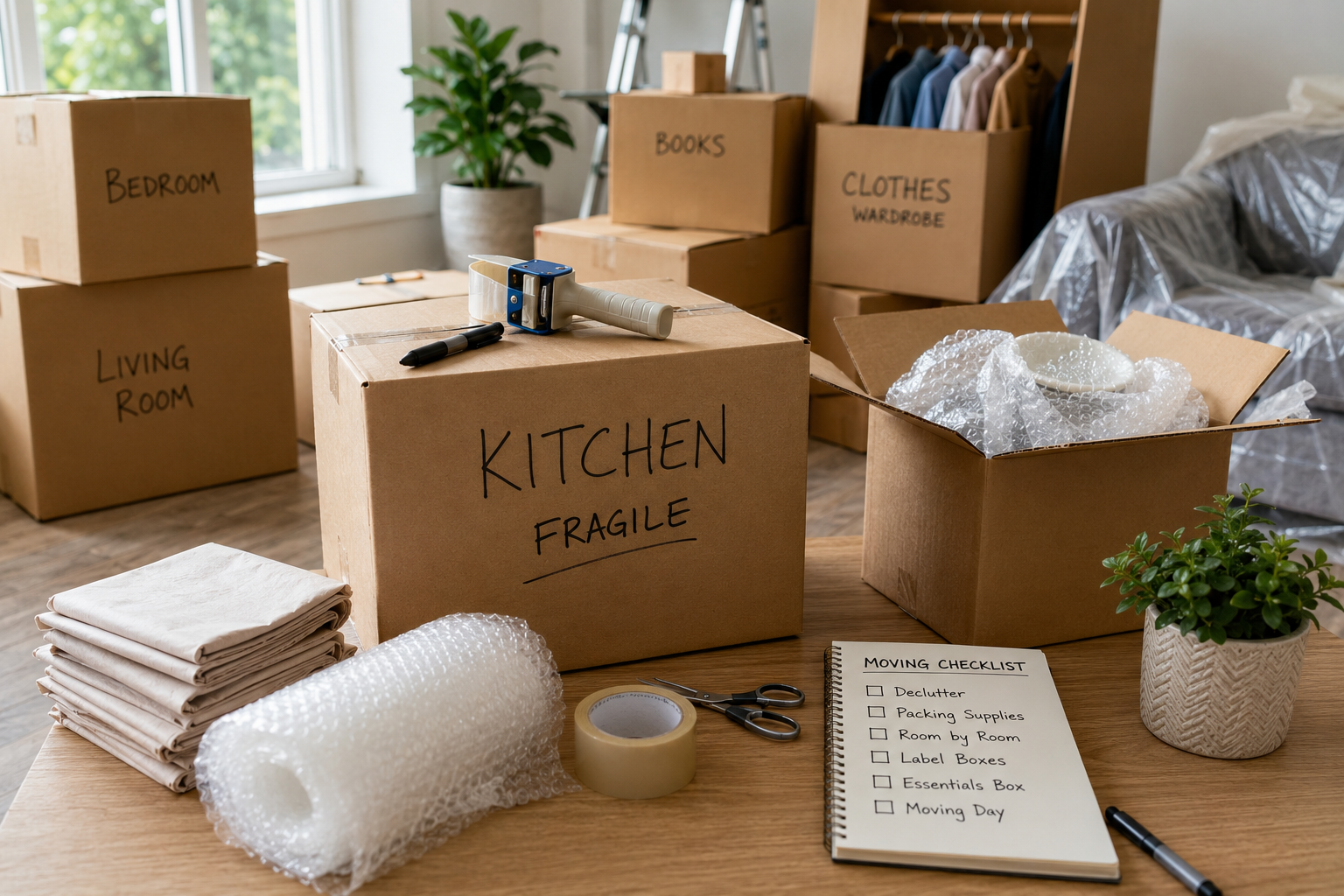
A box simply marked “Fragile” doesn’t provide enough information for a professional crew to handle it correctly. To truly protect your investment, use descriptive labels such as “Kitchen – Stemware” or “Dining Room – China.” This allows your movers to prioritize the box’s placement in the truck. You should also use a “Top-Load Only” designation, which ensures that nothing heavy is ever stacked on top of your delicate items. We suggest creating a master inventory list as you go. This helps you realize which boxes need immediate attention upon arrival at your new home, reducing the stress of the first night in your new space. Organized labeling transforms a chaotic pile of boxes into a manageable, logical sequence.
Beyond the Kitchen: Electronics, Art, and Pianos
While plates and glasses are common concerns, the most complex challenge of packing fragile items for moving often lies in your living room and home office. High-value electronics and fine art require more than just cushioning; they need specialized structural support to survive the journey. LED and OLED screens are particularly vulnerable. The number one killer of these displays isn’t a drop, but rather static pressure on the glass surface. Even leaning a light box against a screen can cause internal pixel damage. If you’ve lost the original manufacturer packaging, we recommend using a heavy-duty telescopic box with foam corner protectors to keep the screen surface completely isolated.
Musical instruments introduce another layer of complexity involving climate and mechanical tension. For example, professional piano moving isn’t just about heavy lifting. It requires an understanding of how British Columbia’s humidity changes can affect the soundboard and internal strings. For smaller stringed instruments, we suggest slightly loosening the strings before the move to account for temperature-induced contraction or expansion. If you’re managing a move with high-value collections, our residential moving services ensure these items receive the specialized care they deserve.
Packing Fine Art and Mirrors
Art requires a delicate touch to avoid permanent surface damage. For oil paintings, always use acid-free glassine paper as the first layer. Standard plastic or bubble wrap can trap moisture or bond with the paint over time. We also suggest the “X” tape method for any glass-fronted frames. By placing a large “X” of masking tape across the glass, you ensure that if a break does occur, the shards are held in place rather than falling inward to shred the artwork. Mirrors and large frames must always be transported on their edge. Cardboard is strongest when vertical, and laying a mirror flat makes it susceptible to cracking from the slightest vibration.
Sensitive Electronics and Gadgets
Modern gadgets are sensitive to both physical shock and electrical discharge. Use anti-static bubble wrap for computer components to prevent static build-up that can fry internal hardware. It’s also vital to remove all batteries before a long-distance BC move. Leaking battery acid can ruin a device before you even reach your new home. To simplify your first night, use the “Cabling Secret”: take a photo of the back of your devices before unplugging them, then bundle the cords in labeled bags. This organized approach ensures your home office is back online without the frustration of tangled wires or missing adapters.
Professional Packing vs. DIY: Making the Choice
Deciding whether to handle the packing fragile items for moving yourself or hiring experts depends on your specific inventory and timeline. A small apartment with replaceable items is a great candidate for DIY. However, for large family homes, piano moving, or high-value collections, expert packing services in Vancouver provide a level of security that’s hard to replicate alone. If you’re looking for a middle ground, consider a partial packing compromise. You can manage the linens, books, and non-breakables while leaving the kitchen and china cabinets to the professionals. This strategy significantly reduces moving day liability and ensures your most difficult rooms receive the expert attention they require for a safe arrival.
The True Cost of a DIY Move
DIY moves often hide their real price in ways that aren’t immediately obvious. While you save on upfront labour, you spend dozens of hours sourcing quality materials and wrapping items. Professional efficiency can cut days of stressful work down to just a few hours of organized activity. There’s also the matter of liability and protection. Most insurance providers won’t cover damage to items packed by the owner, as they cannot verify the internal techniques or the quality of the boxes used. Choosing professional residential moving services is a Vancouver favourite because it transfers the responsibility of safety to the experts. It’s a way to remove the mental burden of the transition and realize a faster, safer move.
Final Checklist for Moving Day
Before the truck arrives at your Tsawwassen or Greater Vancouver home, a final walkthrough ensures everything is ready for a smooth transition. Taking ten minutes for these final checks can prevent the small errors that lead to broken items. Our crews value clear communication, and being prepared helps us work more effectively on your behalf.
- Inspect box bottoms: Check every container one last time to ensure the high-tensile tape is holding firm and hasn’t been loosened by Vancouver’s humidity.
- The Essentials Box: Set aside a clearly marked box containing medications, chargers, and basic toiletries. Ensure it stays with you or is the last item loaded so it doesn’t get buried.
- Crew Communication: Talk to your I&T Excellent Movers Inc crew about specific boxes that require extra care, such as those containing heirlooms or delicate electronics mentioned in previous sections.
- Inventory Verification: Cross-reference your master list with the boxes ready for loading to ensure nothing is left behind in a closet or crawlspace.
Clear communication is the final piece of the puzzle. By being organized and prepared, you ensure your possessions are handled with the same care and responsibility you’d give them yourself. This methodical approach builds the foundation for a successful, damage-free move across BC.
Securing Your Transition with Professional Care
Securing your most delicate possessions involves a blend of the right materials and a methodical technique. By eliminating internal movement and respecting the physics of protection, you can ensure that even the most sensitive electronics and heirlooms arrive safely. Remember that packing fragile items for moving isn’t just about the thickness of the wrap; it’s about building a support system that withstands the unique road conditions and humidity levels found across British Columbia. Whether you’re managing a residential move in Tsawwassen or a complex commercial relocation in downtown Vancouver, prioritizing these professional standards will remove the mental burden of the transition.
At I&T Excellent Movers Inc, we specialize in the meticulous handling of high-value items, from fine art to specialized piano moving. Our team provides comprehensive support across Surrey, Vancouver, and all of BC to give you total peace of mind. If you’re ready to ensure a damage-free arrival for your next home, Get a Free Quote for Professional Packing and Moving in Vancouver today. Your possessions are the heart of your home, and we’re here to help you move them with the steady, quiet competence you deserve. You’ve got this, and we’re here to help.
Frequently Asked Questions
What is the best material for packing fragile items?
Unprinted newsprint is generally the best all-around material for your move. It’s dense, cost-effective, and doesn’t leave ink stains like traditional newspapers. While bubble wrap is useful for surface protection, newsprint creates a tighter “nest” that eliminates internal movement. Combine this with double-walled corrugated boxes to create a professional-grade barrier against the vibrations common during a move across the Lower Mainland.
Can I use newspaper to wrap my dishes?
You should avoid using standard newspapers because the ink can permanently stain porous ceramics and fine china. This often requires expensive professional cleaning or leads to permanent damage. Instead, use clean, unprinted packing paper. It provides the same cushioning benefits without the risk of ink transfer. If you’ve already started with newspaper, ensure you use a layer of clean paper or plastic wrap as the first contact point to protect your valuables.
How do I pack a flat-screen TV without the original box?
Use a specialized heavy-duty telescopic TV box designed for large screens. First, wrap the screen in a non-abrasive moving blanket or anti-static foam to prevent scratches. Secure the corners with foam protectors and place the unit inside the telescopic box, adjusting it for a snug fit. Always keep the TV upright. Laying a flat-screen down can lead to internal glass fractures from the weight of the frame itself during the drive.
Is it better to use bubble wrap or packing paper?
Both materials serve different purposes in the process of packing fragile items for moving. Packing paper is superior for filling “dead space” and wrapping dishes because it’s denser and more structural. Bubble wrap is excellent for protecting the surfaces of high-value electronics or glass-fronted artwork from scratches. For the best results, use paper for the internal structure and bubble wrap for an extra layer of exterior impact protection.
What should I do if a fragile item breaks during the move?
Document the damage immediately by taking clear photos from multiple angles before moving the shards. Keep the broken pieces and the original box, as insurance adjusters often need to see the packing method used. If you’ve used a professional service, notify your crew leader right away. They’ll guide you through the claims process. Being organized with your inventory list makes it much easier to realize a fair resolution for your damaged possessions.
How much extra time should I budget for packing fragile items?
You should budget approximately double the time for a fragile room compared to a standard one. A kitchen with extensive glassware and ceramics can take a single person a full day to pack correctly. Rushing leads to shortcuts like skipping the “crush zone” or improper taping, which increases the risk of damage when packing fragile items for moving. Starting two weeks early ensures you maintain the steady competence needed for a safe transition.
Do I need special boxes for mirrors and large artwork?
Yes, telescopic mirror boxes are essential for any glass-fronted item over two feet in length. These boxes are designed to slide together, creating a custom, reinforced fit that prevents the item from shifting. Standard boxes are rarely large or strong enough to support the weight of a heavy mirror. Using the correct container ensures the glass remains vertical, which is the strongest orientation for preventing cracks during transit through BC.
How do I secure the bottom of a heavy box so it doesn’t break?
Use the “H-tape” method with high-tensile packing tape to reinforce the structural integrity of the box. Seal the centre seam, then apply tape along the side edges where the flaps meet the box walls. This creates a reinforced seal that prevents the bottom from bowing or bursting under the weight of heavy stoneware. It’s a simple step that provides the peace of mind needed when handling your most valuable possessions.