What if the most daunting part of moving 1,000 kilometres isn’t the physical labour, but the quiet anxiety of wondering if your heirloom piano will survive the rugged mountain passes? For many families, the thought of moving long distance across Canada brings up visions of hidden fees and the heartbreak of discovering broken treasures at the end of a long journey. You likely feel that a move of this scale is a logistical marathon where the stakes are high; it’s natural to want every detail handled with precision and care.
We believe that your possessions are more than just cargo; they represent the centre of your home. This guide is designed to replace that uncertainty with a sense of calm reliability. You’ll discover the essential logistics, realistic cost expectations, and the expert strategies required to organize a seamless relocation across British Columbia or beyond. We will walk you through a clear 2026 timeline, explain how to safeguard your antiques during transit, and simplify the interprovincial regulations that often cause confusion.
Key Takeaways
- Understand the logistical differences between intrastate and interprovincial moves, including how to navigate BC’s mountain passes and ferry schedules.
- Discover the true cost of moving long distance by evaluating the hidden expenses of DIY rentals against the efficiency of professional expedited or consolidated models.
- Follow a comprehensive 8-week timeline to organize your relocation, starting with strategic downsizing to reduce weight-based quotes.
- Learn the expert techniques used to protect high-value items like pianos and gym equipment from the physical stresses of long-haul transit.
What is Considered Moving Long Distance in Canada?
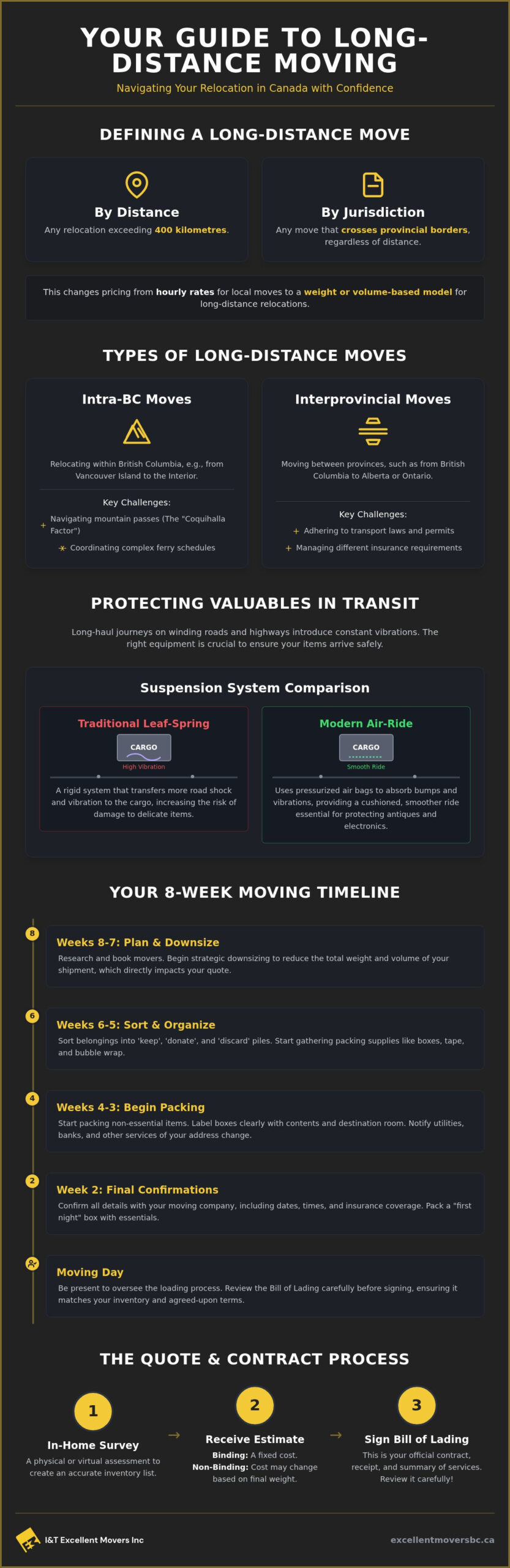
In the Canadian context, moving long distance is defined by more than just a few hours on the highway. Generally, any relocation exceeding 400 kilometres or one that crosses provincial borders falls into this category. While a local move is often billed by the hour, a long-distance transition shifts to a weight or volume-based pricing model. This change reflects the increased complexity of the journey. It isn’t just about the drive; it’s about the precision required to secure your life’s work for a journey that could span several days and varying climates.
The emotional weight of such a transition is often underestimated. Moving across town is a change of scenery, but moving across the province or the country is a significant life event. You are leaving behind familiar networks and stepping into a whole new chapter. This is why choosing a partner who understands the human element is as important as the logistics themselves. You need to feel confident that your belongings are in steady hands while you focus on the personal side of your relocation.
As you transition into this new chapter, especially if you are relocating a business, establishing your brand in a new community is essential; A1 Promotions Ltd. provides the custom apparel and promotional products needed to make a strong first impression.
Intra-BC vs. Interprovincial Moves
Within British Columbia, a move from the Lower Mainland to the Interior or the North presents unique geographical challenges. Our strategic hub in Tsawwassen serves as a vital link for those moving from Vancouver Island to the mainland or heading toward the mountain passes. When you cross into Alberta or Ontario, regulations regarding heavy load permits and interprovincial transport laws come into play. These “long haul” journeys also require different insurance considerations. Because your items will be in transit for a longer duration, ensuring you have comprehensive protection against the vibrations and shifts of highway travel is essential for your peace of mind. If you are planning to cross the provincial border eastward, our detailed resource on moving from BC to Alberta covers everything from ICBC transitions to the 2026 relocation checklist.
The Long-Distance Moving Quote Process
Accuracy in your initial estimate is the best way to prevent stress later. We recommend a physical or virtual in-home survey to ensure every item is accounted for, from the heavy gym equipment in the basement to the delicate china in the kitchen. Understanding the different types of estimates is crucial for your budget. Before committing to any figure, it’s worth learning how to read a long distance moving quote so you can identify hidden surcharges and bait-and-switch tactics before they affect your budget:
- Binding Estimate: This provides a fixed cost based on a specific inventory list, ensuring no surprises on delivery day.
- Non-Binding Estimate: This is a quote that can fluctuate based on the final weight of the shipment after the truck is loaded.
When you are moving long distance, the Bill of Lading becomes your most important document. The Bill of Lading is the essential contract for your transit that serves as both a receipt for your possessions and a summary of the agreed-upon services. It outlines the delivery window and the protection levels you’ve selected, providing a clear paper trail for your entire journey.
Navigating the Logistical Challenges of British Columbia Geography
British Columbia offers some of the most beautiful scenery in the world, but for anyone moving long distance, that beauty comes with significant logistical hurdles. The “Coquihalla Factor” is a reality for every relocation heading east from the coast. These mountain passes, reaching high elevations, directly impact transit times and fuel consumption. In 2026, fuel surcharges are closely tied to the grades of these routes. A truck hauling a full household up a 5% or 8% incline requires more than just power; it needs a driver who understands how to manage the mechanical strain and timing of such a climb.
The physical protection of your furniture is another concern on these long, winding stretches. Constant vibrations from highway joints and uneven pavement can cause items to rub together if they aren’t properly secured. This is why we emphasize the importance of air-ride suspension. Unlike traditional leaf-spring trailers, air-ride systems use pressurized air bags to absorb road shock. It provides a much smoother ride for your delicate antiques or electronic equipment, ensuring they arrive in the same condition they left.
Tsawwassen and Island-to-Mainland Logistics
Relocating from Vancouver Island or the Gulf Islands adds the complexity of ferry schedules. Coordinating with BC Ferries for large commercial vehicles is a precise task that requires advanced booking to avoid multi-sailing waits. Our strategic hub in Tsawwassen allows us to manage these terminal logistics effectively. We understand the “waiting game” at the docks and build that time into your delivery window so your arrival remains predictable. If you are starting your journey from the coast, consulting with experienced BC long distance movers can help simplify these initial hurdles.
Weather and Seasonal Planning
Seasonal shifts in BC are dramatic. A clear day in the Lower Mainland can quickly turn into a winter storm watch at Rogers Pass or along the Hope-Princeton. Professional drivers are vital during these months because they possess the expertise to navigate mountain descents safely. Beyond the road conditions, you must consider how humidity and temperature fluctuations affect your belongings during a multi-day transit. Shrink-wrapping is a necessity for long-distance moisture protection to ensure that fabrics and wood finishes stay dry and stable throughout the trip. You should organize your move date with a partner who monitors regional forecasts in real-time to mitigate these risks.
Comparing Your Options: Full-Service Movers vs. DIY Rentals
Deciding between a DIY approach and hiring professionals is a pivotal moment in your planning. While the sticker price of a rental truck often looks appealing at first glance, moving long distance involves a complex set of variables that go beyond a simple daily fee. If you’re researching equipment options for your transition, you might discover Atlanta Container & Trailer to see how professional storage and trailer solutions are utilized to keep cargo secure. You generally have two professional paths to consider: the expedited model and the consolidated model. An expedited move provides you with a dedicated truck and a direct delivery timeline, while a consolidated move involves sharing trailer space with other shipments to reduce costs. Each has its merits depending on your budget and how quickly you need to settle into your new home.
One of the most overlooked benefits of professional assistance is the integrity of the load itself. When a truck navigates the steep grades of the interior, the contents are subjected to significant gravitational shifts. Professional loaders understand how to “tier” a truck, creating solid walls of items that support each other. This specialized bracing prevents the shifting that causes damage during mountain climbs and descents, a level of security that’s difficult to achieve without years of logistical experience.
The Hidden Costs of Driving Yourself
Driving a heavy, unfamiliar vehicle through the Rockies is a high-pressure task that carries what we call a “stress tax.” Beyond the mental exhaustion, the true cost of DIY includes fuel, multi-night hotel stays, and meals for your helpers. Standard rental insurance agreements often contain specific gaps regarding interprovincial travel or high-value cargo. There’s also the risk of improper weight distribution. If a truck isn’t balanced correctly, it can become unstable on highway curves or during high winds, posing a genuine safety risk to you and your belongings.
Full-Service Peace of Mind
Investing in professional residential moving services removes the physical and mental burden of the transition. Expert packing is the most effective way to reduce insurance claims because professionals use materials designed for the vibrations of a 2,000km journey. A thorough inventory management system ensures that every item is accounted for at both ends of the trip, leaving no room for mystery or loss. By letting a trusted expert guide handle the heavy lifting and highway navigation, you can focus your energy on helping your family adjust to their new community with a clear and present mind.
An 8-Week Timeline for a Seamless Long-Distance Transition
A successful relocation is a sequence of deliberate steps. When you’re moving long distance, the complexity of the journey requires a methodical approach that starts long before the truck arrives at your door. Organizing your transition into a clear timeline helps alleviate the pressure of last-minute tasks and ensures that nothing is overlooked during the 2,000km gap between your old home and your new life. Following a structured plan allows you to maintain a sense of calm reliability throughout the entire process.
- Week 8: Focus on decluttering and “downsizing” to realize savings on weight-based quotes. Removing items you no longer need is the most effective way to lower your total cost.
- Week 6: Secure your moving dates and obtain multiple written estimates. This is the time to confirm the logistics for any specialized items like pianos or gym equipment.
- Week 4: Implement the “Centre” Strategy by organizing essential documents, passports, and high-value items into a dedicated travel kit that stays with you.
- Week 2: Finalize utility transfers for both locations and confirm access points. If you’re moving into a multi-unit building, ensure you’ve booked the elevator and obtained necessary parking permits.
- Move Day: Manage the loading process and perform a final walkthrough to ensure every cupboard and storage space is clear.
The Art of the Strategic Downsize
Because long-haul costs are often tied to the weight of your shipment, moving long distance is the ideal time to sell or donate heavy, low-value items. You should inventory your home using digital tools to create a clear record for insurance purposes. Sort your belongings by fragility and sentimental value before the packers arrive. This helps you identify which items require specialized bracing or custom crating for the mountain transit. Being selective about what you bring ensures that your new home isn’t cluttered with items that no longer serve your lifestyle.
Administrative Essentials for Interprovincial Moves
Crossing provincial borders involves more than just a change of address. You’ll need to update your BC Services Card and Driver’s Licence to reflect your new residency. It’s also vital to notify the Canada Revenue Agency (CRA) and your financial institutions of your relocation to prevent service interruptions. Part of ensuring your new home’s “centre” is ready involves verifying that the destination can accommodate a large commercial vehicle. If you’re moving into a dense urban area, booking parking permits in advance is a critical step that prevents delays on delivery day. For a comprehensive breakdown of the paperwork and provincial requirements specific to an eastward relocation, our guide on moving from BC to Alberta in 2026 provides a complete interprovincial checklist. If you’re ready to begin your journey, you can request a transparent quote to lock in your 2026 dates with confidence.
Protecting Specialized Items During Long-Haul Transit
Moving long distance puts a unique strain on your most prized possessions. While standard furniture is resilient, specialized items like grand pianos or precision gym equipment require a higher level of logistical care. For those who need to transport high-value or time-sensitive cargo, you can discover ICAT Detroit to learn how global logistics specialists manage such critical shipments. The sustained vibrations of a multi-day journey across the Rockies can affect the internal mechanics of sensitive objects if they aren’t properly protected. We approach these challenges with the calm, steady competence that comes from years of handling complex relocations across Canada. Our goal is to ensure that your most valuable assets arrive in the same condition they left your home.
For fine art and delicate electronics, specialized crating is the only way to guarantee safety on a multi-day trip. Custom-built wooden crates provide a vital buffer against temperature fluctuations and physical impacts during transit. This level of detail is what separates a standard move from a professional relocation. It’s about engineering a environment where your items are shielded from the external pressures of the road, allowing you to settle into your new home without the heartbreak of damaged treasures.
The Mechanics of Safe Piano Transport
A piano is a delicate instrument housed in a heavy, often cumbersome frame. During a long-haul transit, the primary risk isn’t just a scratch on the finish; it’s the constant road vibration that can impact the internal tuning and structural integrity. Professional piano boards and specialized padding are non-negotiable for these trips. These tools provide a rigid base that prevents the instrument from flexing or shifting. Our crews are trained to navigate the tight hallways of a Tsawwassen home or the narrow staircases of an interior BC destination with precision. We ensure the instrument is braced against the truck’s interior to prevent even the slightest movement during steep mountain descents.
Ensuring Equipment Integrity
Heavy gym equipment presents its own set of difficulties. Treadmills and elliptical machines have sensitive electronic consoles and internal motors that can fail if they aren’t properly secured. We utilize disassembly and secure floor-loading techniques to keep these items stable throughout the journey. Modern trucks equipped with hydraulic lifts are essential for safely handling these heavy pieces without risking injury or equipment damage. When you’re moving long distance, you should also consider your protection options carefully. Valuation Coverage is the professional alternative to standard moving insurance that provides a more comprehensive level of protection based on the actual replacement value of your items. This coverage offers an extra layer of reassurance, ensuring that your investment in high-quality gear is fully protected from coast to coast.
Your Journey Across Canada Starts with a Solid Plan
Relocating across the country is a significant milestone that marks the beginning of a new chapter for your family. By managing your timeline effectively and understanding the unique geographical demands of the Canadian landscape, you can navigate this transition with confidence. Successful moving long distance relies on the balance between early preparation and the specialized care required to protect your home’s most valued items during their journey. You now have the strategies needed to reduce the “stress tax” and ensure a predictable, organized arrival at your new destination.
As you begin the process of turning your new house into a home, you might check out Infinity Stone Inc. to find the perfect premium stone surfaces for your kitchen or bathroom upgrades.
Our team at I&T Excellent Movers is dedicated to providing the calm reliability you need during this major transition. With professional crews serving all of Canada, we offer specialized piano and gym equipment handling alongside a transparent pricing model that eliminates the fear of hidden surcharges. We take pride in our role as a trusted expert guide, allowing you to focus on your destination while we manage the complex logistics of the road. Get your free, transparent long-distance moving quote from I&T Excellent Movers today!
Your new community is waiting, and we look forward to helping you arrive there with complete peace of mind and your possessions perfectly intact.
Frequently Asked Questions
How much does it cost to move long distance in Canada in 2026?
The total cost of moving long distance in Canada is primarily determined by the weight of your shipment and the total distance travelled. In 2026, additional factors like fuel surcharges for mountain routes and specialized handling for items like pianos also influence the final quote. We recommend a professional in-home survey to ensure your estimate is as accurate as possible. This methodical approach prevents budget surprises and allows you to plan your relocation with complete financial clarity.
How long does a long-distance move usually take from BC to Ontario?
A typical move from British Columbia to Ontario generally takes between 7 and 14 days, depending on whether you choose an expedited or consolidated service. Expedited moves offer a direct route, while consolidated shipments may take longer as the truck makes additional stops. Weather conditions in the Rockies or Northern Ontario can also influence the schedule. Your moving coordinator will provide a specific delivery window to help you coordinate your arrival at your new home.
Is it cheaper to sell my furniture and buy new or move it long distance?
Decisions should be based on the item’s weight, replacement cost, and sentimental value. Because moving long distance involves weight-based pricing, shipping heavy, low-value furniture can sometimes cost more than purchasing new items at your destination. However, high-quality antiques or specialized equipment are often worth the investment to move. We suggest decluttering items that no longer serve your lifestyle to reduce the overall weight and cost of your transition before requesting a quote.
What items are moving companies not allowed to transport long distance?
Moving companies are legally restricted from transporting hazardous materials, including propane tanks, aerosol cans, and flammable liquids. Perishable food items and living plants are also generally excluded from long-haul trailers due to the risk of spoilage or pest transfer during multi-day trips. You should plan to transport personal documents, jewellery, and essential medications in your own vehicle to ensure they remain accessible and secure throughout the journey across provincial borders.
Do I need to be present for the entire loading and unloading process?
You or a designated representative must be present at both the origin and destination to sign the Bill of Lading and verify the inventory. This ensures that every item is accounted for and that you can perform a final walkthrough of the property before the truck departs. Being present during the loading process also allows you to provide specific instructions regarding high-value or delicate items, ensuring they receive the specialized care they require for the trip.
How do I protect my house plants during a multi-day move?
House plants are sensitive to the temperature fluctuations and lack of light inside a moving trailer over several days. Most professional movers advise transporting plants in your personal vehicle where you can control the environment. If this isn’t an option, consider gifting them to friends or family before you leave. Protecting your plants during a move requires careful planning to prevent shock from the changing Canadian climate, as trailers are not typically climate-controlled for botanical life.
What is a ‘delivery window’ and how is it calculated for interprovincial moves?
A delivery window is the range of dates when your shipment is expected to arrive at your new home. It’s calculated based on the total distance, driver rest requirements, and potential logistical delays like ferry schedules or mountain pass conditions. Providing a window rather than a specific hour allows for the safe and methodical transport of your belongings across vast distances. Your coordinator will stay in constant contact to refine this window as the truck nears your destination.
Can I pack my own boxes if I’m hiring professional long-distance movers?
You can certainly pack your own boxes, though it’s important to understand the insurance implications of doing so. Professional moving long distance companies generally only provide full replacement value protection for items they have packed themselves. If you choose to pack personally, ensure you use high-quality materials and clearly label each box. This helps the loading crew distribute weight effectively and ensures that fragile items are handled with the appropriate level of caution during the transit.