Imagine standing in a narrow downtown Vancouver hallway, watching your elevator booking time slip away while a strata council member notes down every scuff on the wall. It’s a high-pressure situation that can turn a fresh start into a financial headache. Most British Columbians agree that moving is one of life’s most taxing transitions, especially when navigating the strict bylaws and tight parking common in our urban centres. You’ve worked hard for your damage deposit, and you shouldn’t have to worry about forfeiting it due to a simple logistical oversight.
Our 2026 guide helps you master your next relocation with a comprehensive, strata-approved checklist designed for those utilizing professional apartment moving services. We’ll walk you through the essential steps to protect your deposit, manage limited elevator windows, and ensure your move follows every local rule with quiet, steady competence. From booking logistics to protecting common areas, this guide provides the clarity you need for a seamless transition to your new home.
Key Takeaways
- Gain a clear understanding of the logistical nuances that distinguish apartment relocations from traditional house moves.
- Learn the critical timeline for coordinating with your Strata Council and booking elevator windows when scheduling apartment moving services.
- Discover packing techniques tailored for smaller urban spaces, including the “First-Night Box” strategy and essential decluttering tips.
- Protect your damage deposit by using protective equipment like floor runners and performing a thorough final walkthrough with your landlord.
- Navigate your new building’s orientation requirements and verify your inventory to ensure a calm, organized settling-in process.
Why Apartment Moving Services Require a Unique Strategy
Apartment moving services aren’t just a subset of general hauling; they’re a specialized logistics category designed for the unique constraints of multi-unit dwellings. While a house move often involves a spacious driveway and multiple entry points, an apartment relocation is typically elevator-dependent. This means your entire life must fit through a specific door, down a narrow hallway, and into a single lift during a strictly enforced time slot. The psychological effects of moving are often amplified in these settings because the margin for error is so slim. One delayed truck or a sofa that won’t clear the corner can throw off an entire building’s schedule, causing stress for you and your neighbours.
The Challenge of Limited Access and Tight Spaces
In a standard Vancouver condo, the distance between your front door and the loading bay is often significant. This “long carry” requires more than just physical strength; it demands specialized equipment and precise planning. Professional apartment moving services utilize slim-profile dollies, padded floor runners, and corner guards to protect both your belongings and the building’s common areas. Navigating tight hallways without scuffing the walls is an art form. DIY attempts often result in damaged drywall or scratched door frames because consumer-grade equipment isn’t built for these precise maneuvers. Without the right tools, a simple turn in a narrow corridor can become an insurmountable obstacle that delays your entire day.
The Financial Risk of ‘Doing It Yourself’
The 2026 BC Strata Property Act has reinforced the authority of strata councils to levy significant fines for bylaw infractions. If you haven’t booked the elevator or if your move-out exceeds the allotted four-hour window, you could face unexpected charges that far outweigh the cost of hiring help. Choosing professional residential moving services acts as a form of risk mitigation. Experts understand how to work within these rigid timelines and how to protect the unit to ensure you get your damage deposit back in full. Minor wall nicks or floor scratches might seem trivial, but they’re often the primary reason landlords withhold funds during a final inspection. A professional team prioritizes the integrity of the space, ensuring that your transition doesn’t leave a trail of costly repairs behind. By removing the physical and mental burdens of the move, you can focus on settling into your new community with peace of mind.
The Pre-Move Logistics Checklist: Mastering the Strata
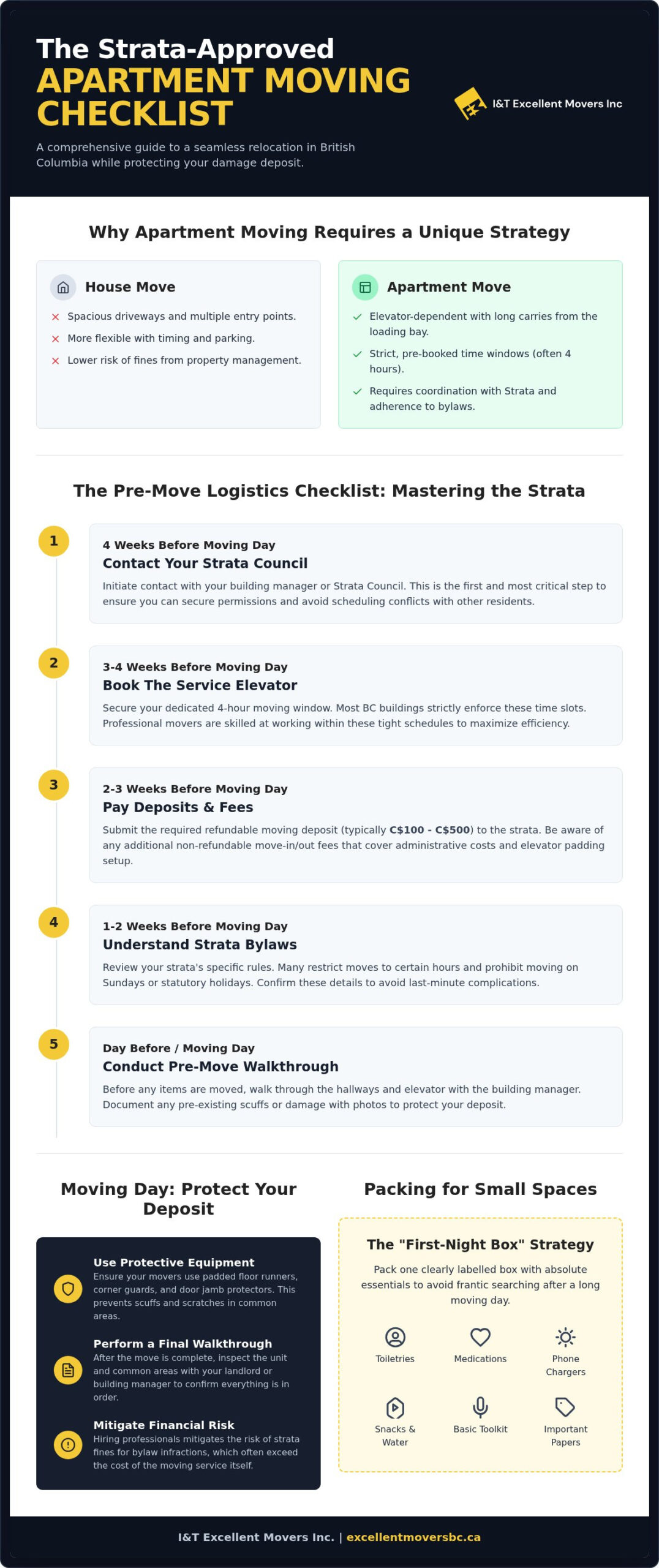
Successful apartment relocations in British Columbia rely on a strict timeline that begins long before the first box is taped. Unlike a detached home move, where you control the driveway and the front door, an apartment move requires permission from your Strata Corporation. Contacting your Strata Council or Building Manager at least four weeks in advance is the first critical step. This lead time ensures you can secure the necessary permissions and avoid scheduling conflicts with other residents who might be moving on the same day. Using a detailed moving checklist can help you track these administrative tasks alongside your physical packing to ensure nothing slips through the cracks.
Once you’ve made contact, your second priority is to book the service elevator for a specific four-hour window. Most BC buildings strictly enforce these windows to ensure residents aren’t left without elevator access for extended periods. Professional apartment moving services are accustomed to these tight schedules and can work efficiently to maximize every minute of your allotted time. Additionally, you’ll likely need to pay a refundable moving deposit. This fee, often ranging from C$100 to C$500, protects the strata against potential damage to common areas. If you feel overwhelmed by these administrative requirements, partnering with experienced apartment moving services can provide the steady support needed to manage building-specific logistics while you focus on your transition.
Understanding Strata Bylaws and Move-In/Out Fees
Every strata has its own set of bylaws, many of which restrict moves to specific hours, often excluding Sundays or statutory holidays. It’s also common to encounter a non-refundable move-in fee, which covers the administrative cost of updating building records and installing elevator pads. Before the first item is moved, conduct a thorough walkthrough of the hallways and elevator with the building manager. Document any pre-existing scuffs or dents with your phone camera to ensure your refundable deposit is returned without dispute. This simple act of due diligence provides peace of mind and prevents you from being held liable for damage caused by previous tenants.
Parking and Loading Bay Coordination
Parking in urban centres like Vancouver or Surrey can be a significant hurdle for large moving trucks. If your building doesn’t have a dedicated loading bay, you may need to apply for City of Vancouver temporary “No Parking” signs to reserve street space. Furthermore, check the clearance heights of underground parkades before your moving day. Many modern trucks are too tall for standard residential parkades, requiring the crew to park on the street and perform a “long carry.” Ensure the loading bay is clear of garbage bins or delivery vehicles by notifying your neighbours or the building manager 24 hours in advance. A clear path is essential for an efficient, stress-free move. If your relocation extends to the surrounding region, working with trusted movers Richmond BC residents rely on can help you navigate the unique parking and strata requirements found in communities like Brighouse and Steveston.
Packing for Small Spaces: A Room-by-Room Checklist
Packing for a multi-unit dwelling requires a more disciplined approach than a typical house move. When you’re transitioning to a smaller footprint, a rigorous “keep or toss” audit becomes your most valuable tool. Decluttering before the move reduces the physical volume of your belongings, which directly translates to a more efficient experience with apartment moving services. If an item hasn’t served a purpose in the last year, it likely doesn’t deserve a spot in your new, streamlined space. This process isn’t just about saving space; it’s about entering your new home with only what truly adds value to your life.
Organization is the second pillar of a successful apartment relocation. Colour-coding your boxes by room ensures that once the crew reaches your new floor, every item finds its place immediately. This prevents boxes from piling up in the narrow entryway, which is a common bottleneck in urban units. Alongside your colour-coded boxes, prepare a “First-Night Box” containing toiletries, basic kitchenware, and essential documents. Having these items accessible prevents the frustration of digging through stacks of cardboard after a long day of logistics. It’s about maintaining comfort during the transition.
To maximize the efficiency of the moving truck, utilize professional-grade wardrobe boxes. These allow you to hang clothing directly from the closet, protecting your garments while utilizing the vertical space that standard boxes often leave empty. It’s a small detail that makes a significant difference in how securely your possessions are transported during apartment moving services. Proper equipment ensures that even the most delicate fabrics arrive in pristine condition.
Vertical Packing and Fragile Item Safety
Apartment moves involve unique physical stressors, including the subtle vibrations of service elevators and the necessity of navigating sharp hallway corners. Electronics should be packed in their original boxes whenever possible, or double-walled containers with ample padding to absorb shocks. For mirrors and large glass surfaces, use telescopic boxes and thick moving blankets to prevent cracks during tight corner navigation. You can also save space by using the “Russian Doll” method. This involves nesting smaller, soft items inside larger containers like mixing bowls or suitcases to minimize the total box count and keep your items secure.
Specialized Item Handling: Pianos and Gym Gear
Heavy or delicate items require a separate logistical plan to ensure safety and strata compliance. For instance, piano moving in a high-rise setting involves specialized equipment to protect both the instrument and the building’s flooring. Similarly, large sport equipment like treadmills or weight benches often require disassembly to fit through standard door frames or into elevators. Taking the time to break these items down before the crew arrives ensures the move stays on schedule. This proactive approach avoids unnecessary delays and protects the integrity of your equipment and the unit’s walls.
Moving Day Execution: Protecting Your Damage Deposit
Moving day is the culmination of weeks of preparation. It’s also the moment when your security deposit is most vulnerable. While you’ve likely already coordinated with your strata, the physical execution of the move requires a high level of attentiveness to prevent minor accidents from becoming major expenses. Professional apartment moving services prioritize the integrity of your living space just as much as the security of your belongings. By following a strict protective protocol, you can ensure that your transition out of the building is as clean as your entry.
Execution begins with creating a safe environment for both the crew and the property. Before the first box leaves your unit, ensure floor runners and corner protectors are firmly in place. This prevents the heavy traffic of a move from leaving permanent marks on hardwood or carpet. Once the unit is empty, conduct a final walkthrough with your landlord. Use your phone camera to capture high-resolution images of every room, focusing on walls, floors, and door frames. This visual evidence is your best defense against unfair claims. In 2026, the standard move-out inspection process in BC remains a formal, joint walkthrough where both parties must sign a Condition Inspection Report to legally document the unit’s state before the security deposit is settled. To ensure your home meets the cleanliness standards required for a full deposit return, you can learn more about Advance Cleaning Services Inc. and their specialized move-out packages.
Managing the common areas is equally vital for a stress-free day. Clear a wide path from your unit to the service elevator, ensuring no stray items obstruct the hallway. It’s essential to monitor your elevator time closely. Strata overage fines can be steep, often charged by the half-hour if you exceed your booking. Finally, once the truck departs, perform a quick “sweep-out” of the loading bay. Removing stray packing tape or cardboard scraps shows respect for the building community and ensures your departure is remembered for its professionalism. If you’re feeling the pressure of a fast-approaching deadline, reaching out for professional apartment moving services can ensure these protective measures are handled with precision.
The Professional Mover’s Protocol for Protection
Expert crews utilize a methodical approach to safeguard your home. This includes “blanket wrapping” every piece of furniture within the unit before it’s even moved toward the door. For flooring, pros use specialized neoprene runners rather than simple cardboard. These runners provide a non-slip surface that grips the floor while providing a thick cushion against impacts. This level of care is what distinguishes a professional operation from a DIY effort, significantly reducing the risk of scuffs in those notoriously tight Vancouver hallways.
Last-Minute Adjustments and Emergency Plans
Even the best-laid plans can face unexpected hurdles. If a service elevator breaks down on move day, communication is your most important tool. Immediately notify both your building manager and your moving team to pivot the strategy. You may also find yourself with “last minute” items that didn’t fit into your original box count. Having a small supply of “open-top” bins can help manage these loose items quickly. For those facing a sudden change in timeline or a cancellation, the benefit of last minute moving services cannot be overstated. These specialized teams are equipped to handle rapid deployments, providing the calm reliability needed to turn a potential crisis into a managed success.
Settling In: The Post-Move Apartment Checklist
Once the moving truck pulls away and your boxes are safely inside your new unit, the final phase of your relocation begins. This stage is about more than just opening cardboard containers; it’s about transitioning from a logistical operation to the comfort of a home. Start by verifying every box and piece of furniture against your master inventory list. If you’ve utilized professional apartment moving services, this process is typically straightforward due to their methodical labeling systems. Identifying any missing or misplaced items early allows for a quick resolution while the details of the day are still fresh in your mind.
Administrative tasks remain a priority during your first week. You’ll need to update your address with BC Hydro, ICBC, and Canada Post to ensure your essential services and mail follow you to the new location. It is also a practical time to ensure your new home’s climate and plumbing systems are operating efficiently; for those in the Lower Mainland, Perfect Choice HVAC provides professional inspections and repairs. Additionally, review your new building’s strata bylaws regarding move-in orientation. Many Vancouver high-rises require a brief meeting with the building manager to explain security protocols, fob access, and waste management rules. Speaking of waste, dispose of your packing materials responsibly. Rather than overloading the building’s shared recycling bins, which can lead to strata complaints, consider taking large volumes of cardboard to a local BC recycling centre.
The Advantage of Professional Unpacking
The first night in a new apartment can often feel overwhelming if you’re surrounded by towers of boxes. Professional unpacking services can turn that chaos into a functional home in a single day. These experts specialize in organizing kitchens and closets for maximum efficiency, which is especially helpful when working with the limited square footage of urban units. For older adults, partnering with specialized senior moving services is a compassionate way to ensure the new space is set up safely and intuitively. This level of care removes the physical strain of bending and reaching, allowing residents to settle in with quiet competence and peace of mind.
Final Strata Sign-Off and Deposit Recovery
Your final logistical hurdles involve securing your financial interests. Conduct a formal move-in inspection with your new building manager as soon as possible. This is also the appropriate time to contact your previous strata corporation to request the refund of your moving deposit, provided no damage was reported during your departure. To secure your future security deposit, take high-resolution photographs of the apartment’s condition and ensure any pre-existing scuffs are documented on the move-in inspection report before your furniture is fully settled. This proactive documentation acts as a safeguard, ensuring that your eventual move-out years from now is just as stress-free as your arrival today.
Step Into Your New Home With Confidence
Mastering an apartment relocation in British Columbia requires a blend of early preparation and precise execution. By coordinating with your strata council weeks in advance and documenting your unit with care, you ensure that your damage deposit remains protected. Efficient packing strategies and a clear understanding of building logistics turn a potentially overwhelming day into a manageable transition. When you choose professional apartment moving services, you aren’t just hiring labour; you’re partnering with experts who understand the nuances of urban living.
I&T Excellent Movers Inc is a locally owned and operated business based in Tsawwassen, serving the entire Greater Vancouver Area with steady competence. Our expert crews are specifically trained for the tight logistics of BC apartments, offering everything from full-service packing to specialized piano handling. We take pride in removing the physical and mental burdens of your move so you can focus on the excitement of your new space. Get a free, transparent quote for your apartment move today! We look forward to helping you start this new chapter with ease.
Frequently Asked Questions
How far in advance should I book apartment moving services in Vancouver?
You should ideally book apartment moving services 8 to 12 weeks in advance if you are planning to move during the peak summer season or at the end of the month. For mid-month relocations during the winter or spring, a lead time of four to six weeks is usually sufficient. Booking early ensures you can secure your preferred date and provides enough time to coordinate your elevator reservation with the building manager.
What is a strata moving fee, and do I have to pay it?
A strata moving fee is a non-refundable charge set by the Strata Corporation to cover the administrative costs of updating building records and the inevitable wear and tear on common areas. You are required to pay this fee if it is documented in your building’s bylaws. This is separate from a refundable moving deposit, which the strata holds and returns after confirming that no damage occurred to the hallways or elevators during your move.
Can movers take my furniture up the stairs if the elevator is too small?
Professional movers can transport furniture via the stairs if an item cannot fit into the service elevator, provided the staircase is wide enough for safe passage. This is referred to as a “stair carry” and typically incurs an additional fee based on the number of floors involved and the weight of the items. It is helpful to measure your largest pieces of furniture and the elevator interior before moving day to identify these challenges early.
Do I need to buy insurance if I hire professional apartment movers?
While professional apartment moving services include basic carrier liability, which usually covers C$0.60 per pound, many residents choose to purchase “Full Replacement Value” protection for added security. This higher level of coverage ensures that if an item is damaged, the cost of repair or replacement is fully covered. You should also review your existing tenant insurance policy, as some plans provide limited coverage for belongings while they are in transit.
How much does it cost to move a piano into a high-rise apartment?
The cost of moving a piano depends on several factors, including the type of piano, the distance of the “long carry” to the elevator, and any stairs encountered within the unit. Because pianos are heavy and mechanically complex, they require specialized equipment and a dedicated team to manage the weight safely. To get an accurate figure, you should request a transparent quote that reflects the specific logistical hurdles of your building’s layout.
What happens if my move takes longer than my booked elevator time?
If your move exceeds the allotted four-hour window, you may face significant strata fines, which many Vancouver buildings charge by the half-hour. In some cases, the building manager may even require the movers to stop using the elevator to accommodate another resident’s booking. To prevent this, ensure your moving crew is appropriately sized for the volume of your belongings and that all items are fully packed and ready before the truck arrives.
Are there items that professional movers in BC are not allowed to transport?
Movers are prohibited by safety regulations from transporting hazardous or flammable materials, including propane tanks, aerosol cans, gasoline, and fire extinguishers. Most companies also decline to move perishable food, open liquids, or live plants, as these can cause damage to other items in the truck. You’ll need to plan to move these specific items yourself in a personal vehicle to ensure the safety of the crew and your possessions.
How do I secure a parking permit for a moving truck in downtown Vancouver?
To reserve space on a busy downtown street, you must apply for a “Temporary Special Event” or “No Parking” permit through the City of Vancouver at least five business days before your move. This permit allows the city to place temporary signs that clear a zone for the moving truck, preventing parking tickets and ensuring the crew has a short path to the building entrance. If your building has a loading bay, always check the height clearance to ensure the truck can fit.